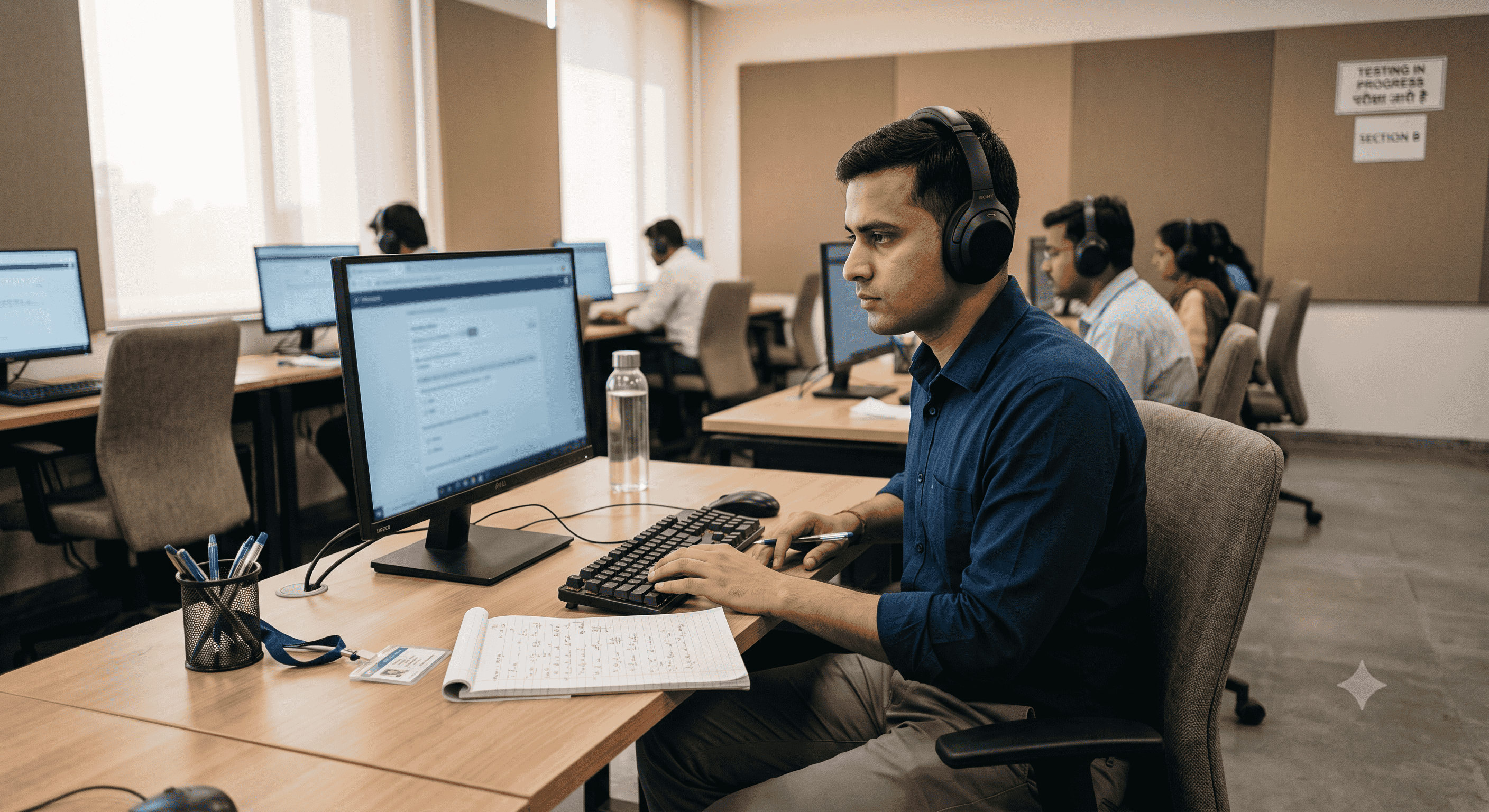
Managing Exam Nerves: How to Stay Calm During a 100 WPM Live Dictation
You have spent months, perhaps years, preparing for this exact moment. You sit down in the examination hall, your notebook is open, your pencil is sharpened, and the room falls dead silent. Then, the speaker begins. At 100 Words Per Minute (WPM), there is absolutely no time for hesitation. For an SSC Stenographer aspirant or a future Court Stenographer, this live Shorthand Dictation is the ultimate test of both skill and mental endurance.
But what happens when your heart starts racing? What if your hand shakes? Exam nerves can ruin even the best preparation. Managing anxiety during a high-speed dictation isn't just a mental exercise; it is a critical skill that dictates your success. Whether you are aiming for Grade C or a high-stakes court position, learning to stay composed is just as important as mastering every Pitman Exercise.
In this guide, we will break down the psychological and practical techniques to keep your hand steady, your mind sharp, and your transcription flawless, backed by the resources at Free Shorthand Typing.
Why Staying Calm Matters More Than You Think
When you panic, your body enters a "fight or flight" response. Adrenaline floods your system, which causes micro-tremors in your hands. In regular writing, a shaking hand just makes your handwriting a bit messy. In Pitman Shorthand, a shaky hand turns a light stroke into a heavy stroke, a small circle into a large loop, and halves into full strokes. This directly destroys your transcription capability.
Furthermore, panic disrupts your short-term memory buffer. A skilled stenographer doesn't write exactly what they hear in the same millisecond; they hold three to five words in their head while writing. Anxiety instantly wipes this mental buffer, causing you to drop entire sentences.
The Benefits of a Calm Mind During Dictation
| Mental State | Impact on Shorthand | Result in Typing Test |
|---|---|---|
| Relaxed & Focused | Clear outlines, perfect light/heavy strokes, maintained word buffer. | High Typing Accuracy and seamless transcription. |
| Anxious & Panicked | Distorted curves, confused vowels, skipped phrases. | Slow transcription, guessing words, high error rate. |
Step-by-Step Guide: Mastering the Dictation Room
Conquering the 100 WPM dictation requires a strategy that begins long before the speaker says the first word. Here is a practical, step-by-step approach to managing your nerves.
Step 1: The Pre-Dictation Setup (Mental and Physical)
Arrive early and get comfortable with your desk. Set up your tools exactly how you practice at home. This familiarity tricks your brain into feeling safe. Practice the 4-7-8 breathing technique five minutes before the dictation begins: inhale for 4 seconds, hold for 7 seconds, and exhale slowly for 8 seconds. This scientifically lowers your heart rate.
Step 2: The First 30 Seconds - Finding the Rhythm
The first paragraph is always the hardest because your adrenaline is peaking. Do not try to write perfectly. Focus on getting into the rhythm of the dictator's voice. Treat the dictation like a song, and your pen is just tapping along to the beat. Focus entirely on the sound, not on the fear of failing.
Step 3: The "Missed Word" Survival Protocol
This is the most crucial skill. At 100 WPM, you will miss a word eventually. When an amateur misses a word, they freeze, try to remember it, and consequently miss the next ten words. When a professional misses a word, they leave a small gap and instantly snap their attention back to what the dictator is saying right now. During transcription, context will often help you fill in the blank.
Step 4: The Transcription Transition
Once the dictation is over, do not rush to the keyboard. Take a deep breath. Read through your shorthand notes for two minutes before the official Typing Test begins. Insert vowels where necessary, fix messy outlines while the audio is still fresh in your memory, and prepare yourself for the screen.
Practical Examples: Contextual Guessing
Let's say you missed a word during a high-speed parliamentary debate dictation. Your notes read: "The government has decided to _____ the new tax policy."
Even though you dropped the outline, your brain knows that verbs like "implement," "revoke," "introduce," or "amend" fit here. By reading the preceding and succeeding sentences during transcription, you can often deduce the correct word, saving your Typing Accuracy.
Common Mistakes Aspirants Make
- Over-practicing on the last day: Trying to do a 120 WPM dictation the night before the exam will only shatter your confidence. Stick to 80-90 WPM to keep your morale high.
- Stopping to draw perfect outlines: Shorthand is not an art class. If an outline is ugly but readable to you, keep moving forward.
- Ignoring computer formatting rules: You can take a perfect dictation, but if you fail the formatting rules, you fail the test. Government Exam Preparation requires knowing exact margins and indentations.
- Translating while writing: Do not read the English or Hindi words in your head while writing outlines. Process the audio directly into shapes.
Frequently Asked Questions (FAQs)
1. How do I build a mental buffer to remember words?
Start by listening to audio broadcasts without writing. Listen to a sentence, pause the audio, and try to write the whole sentence from memory. Gradually increase the length of the sentences.
2. What if the dictator's pronunciation is difficult to understand?
Focus on the phonetics. Write down the sounds exactly as you hear them, even if you don't recognize the word. During transcription, sounding out those outlines will usually reveal the intended word.
3. Should I erase mistakes in my shorthand notebook?
Never. Erasing wastes precious seconds. Just strike a quick line through the wrong outline and write the correct one next to it.
4. How can I improve my Typing Speed for the transcription phase?
Consistent, targeted practice. Utilize the English Typing Test and Hindi modules on Free Shorthand Typing. Aim for at least 15 WPM higher than your required exam transcription speed to account for exam-day stress.
5. Is it normal for my hand to cramp during dictation?
It is common, but it indicates a poor grip. You are holding the pencil too tightly due to stress. Consciously loosen your grip during your daily practice.
6. How do I prepare for Allahabad High Court Formatting?
AHC tests have very specific rules regarding line spacing, font size, and paragraph indents. Practice these exact specifications repeatedly so they become muscle memory before the actual test.
7. Which font should I practice for the Hindi Skill test?
It depends entirely on the exam notification. SSC generally allows choices, but many state courts specify one. Master either Kruti Dev Typing or Mangal Typing based on your target exam, and stick to it.
8. Does Free Shorthand Typing provide dictations at 100 WPM?
Yes. The platform offers a wide variety of audio dictations ranging from 60 WPM to 120+ WPM to help you progressively build your speed and handle exam-level pressure.
9. What is the best way to handle long, unfamiliar words?
Write the first syllable and the last syllable, or write it in longhand if it is a proper noun. Don't freeze trying to invent a perfect Pitman outline on the spot.
10. How quickly should I start typing after the dictation?
Take 1 to 2 minutes to scan your notes, place missing vowels on tricky outlines, and calm your breathing. Rushing immediately into typing often leads to early mistakes.
Final Conclusion
Passing a 100 WPM shorthand skill test is as much a test of your psychology as it is of your stenography skills. Exam nerves are natural, but they do not have to control you. By establishing a solid pre-exam routine, accepting that you might miss a word without letting it derail you, and ensuring your computer transcription skills are flawless, you can walk into that exam hall with confidence.
Remember, the dictation is only half the battle. Your ability to accurately transcribe those notes under pressure is what secures the job. Stay calm, trust your training, and let your muscle memory do the heavy lifting.
Ready to master your dictation and typing skills?
Don't let exam day be the first time you face pressure. Practice with high-quality dictations, track your transcription accuracy, and master formatting rules today.
Start Your Free Online Typing Practice on Free Shorthand Typing Now!
Popular Tags:
- Shorthand Dictation
- Exam Preparation
- 100 WPM
- SSC Stenographer
- Pitman Shorthand
- Typing Test
- Typing Speed
- Typing Accuracy
- Court Stenographer
- Government Jobs
- Skill Test
- Anxiety Management
- Dictation Tips
- Transcription
- Free Shorthand Typing
- Online Practice
- Allahabad High Court
- English Typing
- Hindi Typing
- Skill Building.